
Art Collection
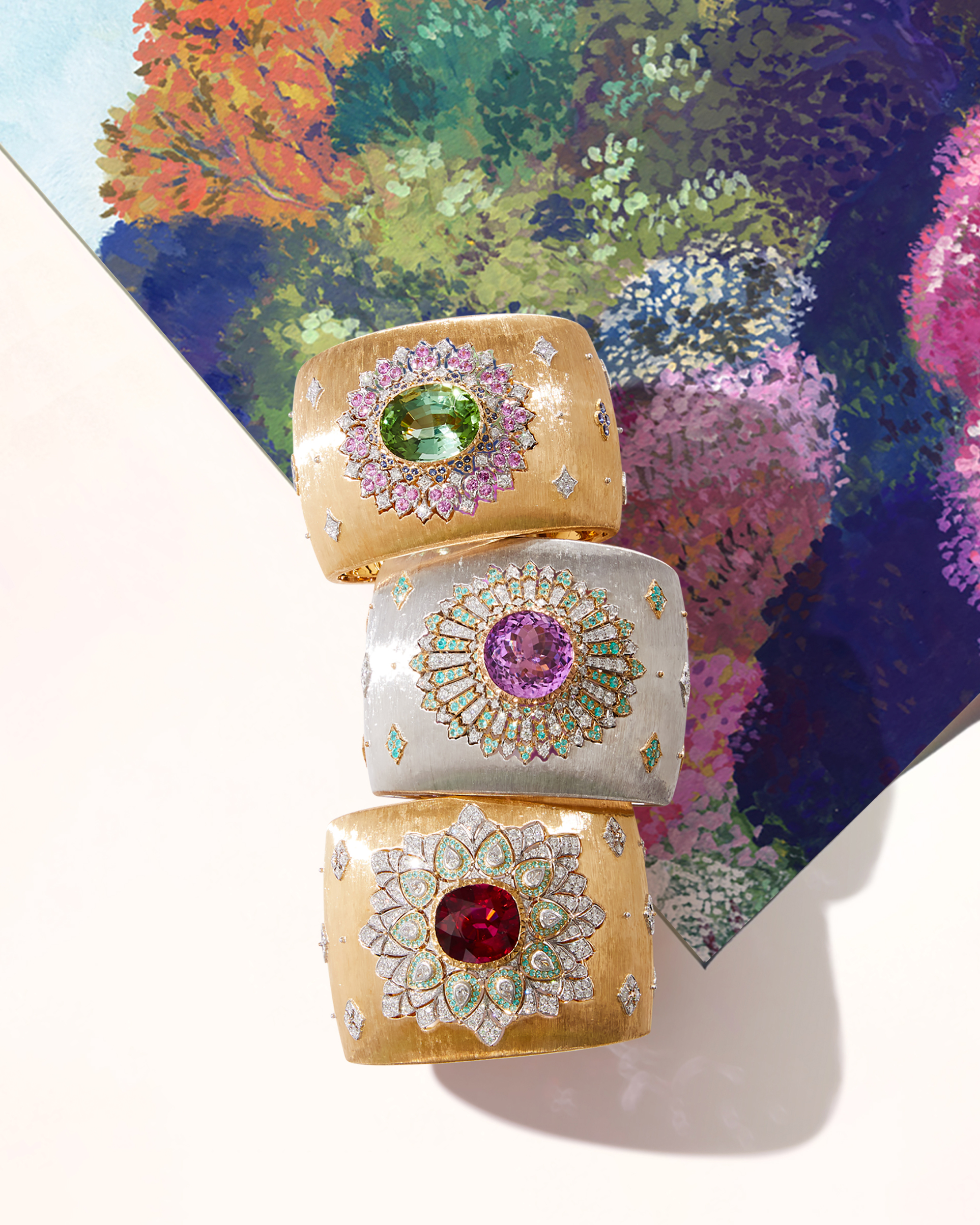
Andrea e Lucrezia Buccellati hanno creato insieme cinque gioielli unici ispirandosi ai dettagli di alcune tele di grandi pittori appartenenti alle correnti dell’Impressionismo e del post-Impressionismo.
更改 :
Andrea e Lucrezia Buccellati hanno creato insieme cinque gioielli unici ispirandosi ai dettagli di alcune tele di grandi pittori appartenenti alle correnti dell’Impressionismo e del post-Impressionismo.
Andrea and Lucrezia Buccellati have conceived five “objets d’art” inspired by details of some of the great master painters of Impressionism and post-Impressionism.


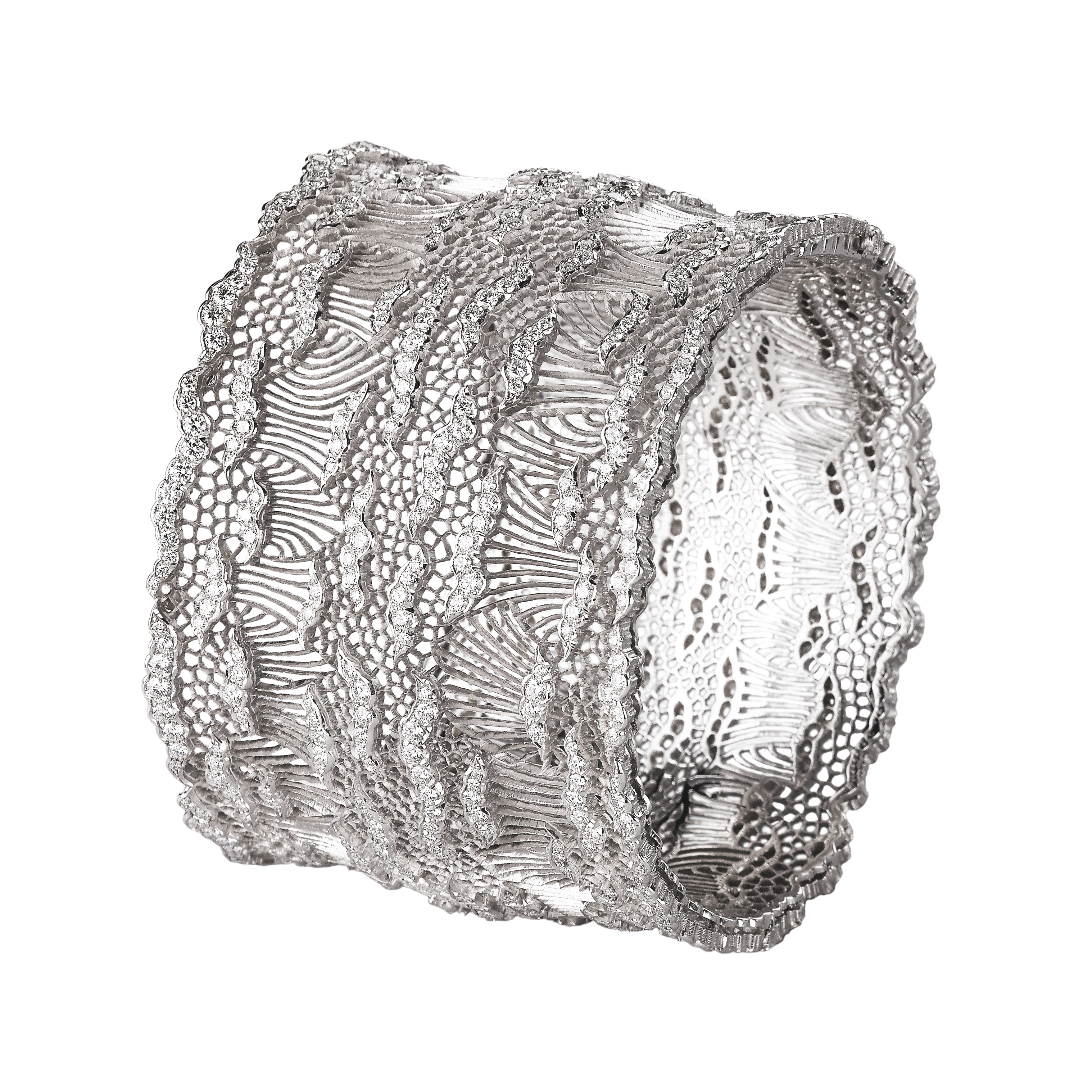
Inspired by Homer’s painting this white gold bracelet, handcrafted with the Tulle technique, reproduces the sensual movement of the waves, the tumultuous splashes of the white foam upon them and it is entirely set with diamonds.
An expression of strength and passion, both innate in the immensity of the ocean, it conveys the elegance and refinement of Mother Nature.
From the early 1870s until his death, the sea was one of Homer's favorite themes, especially after moving in 1883 to Prout's Neck, a coastal village in Maine. This watercolor belongs to a group of pure "seascape paintings" that Homer produced in the 1890s.
Image courtesy of Wildenstein & Co. Inc.


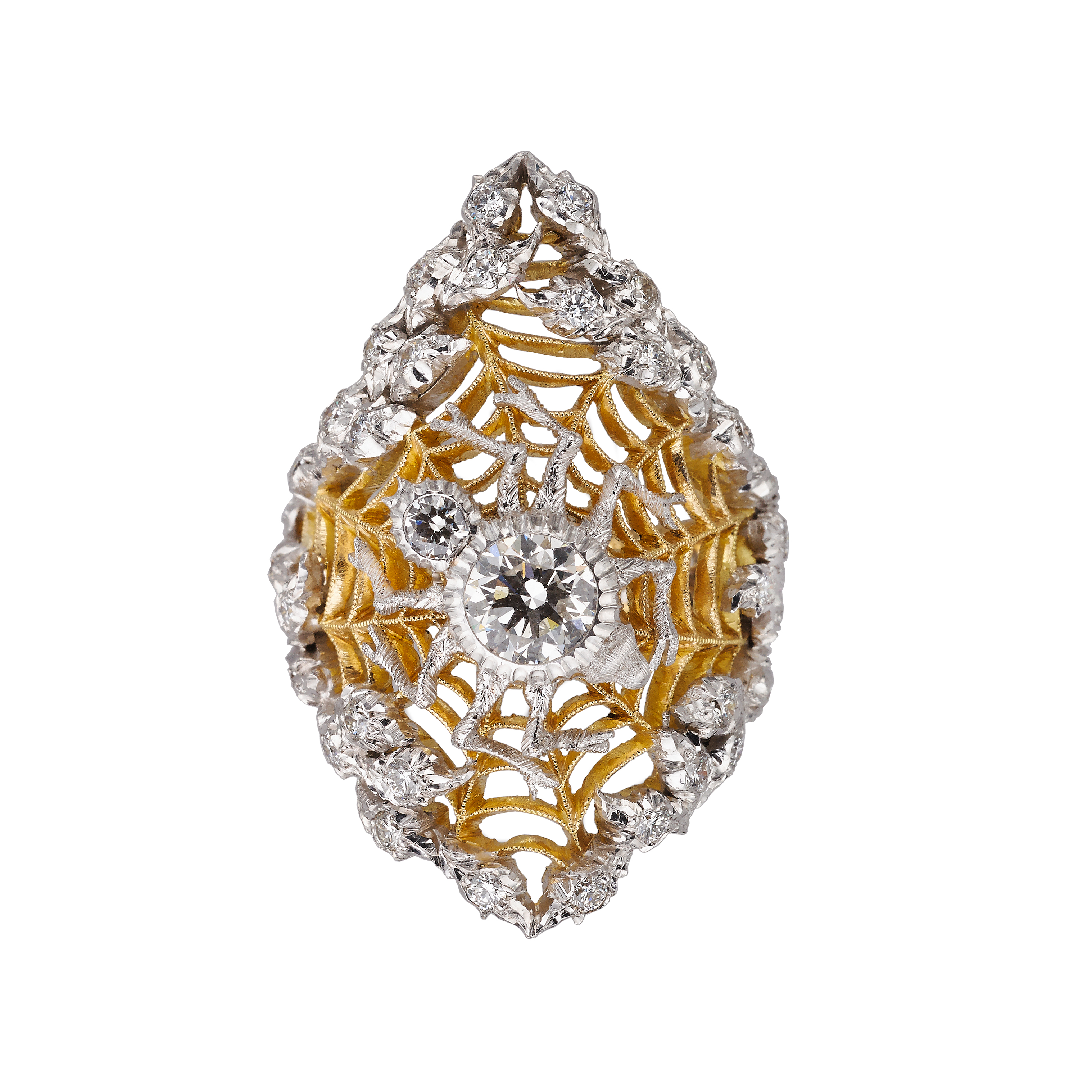
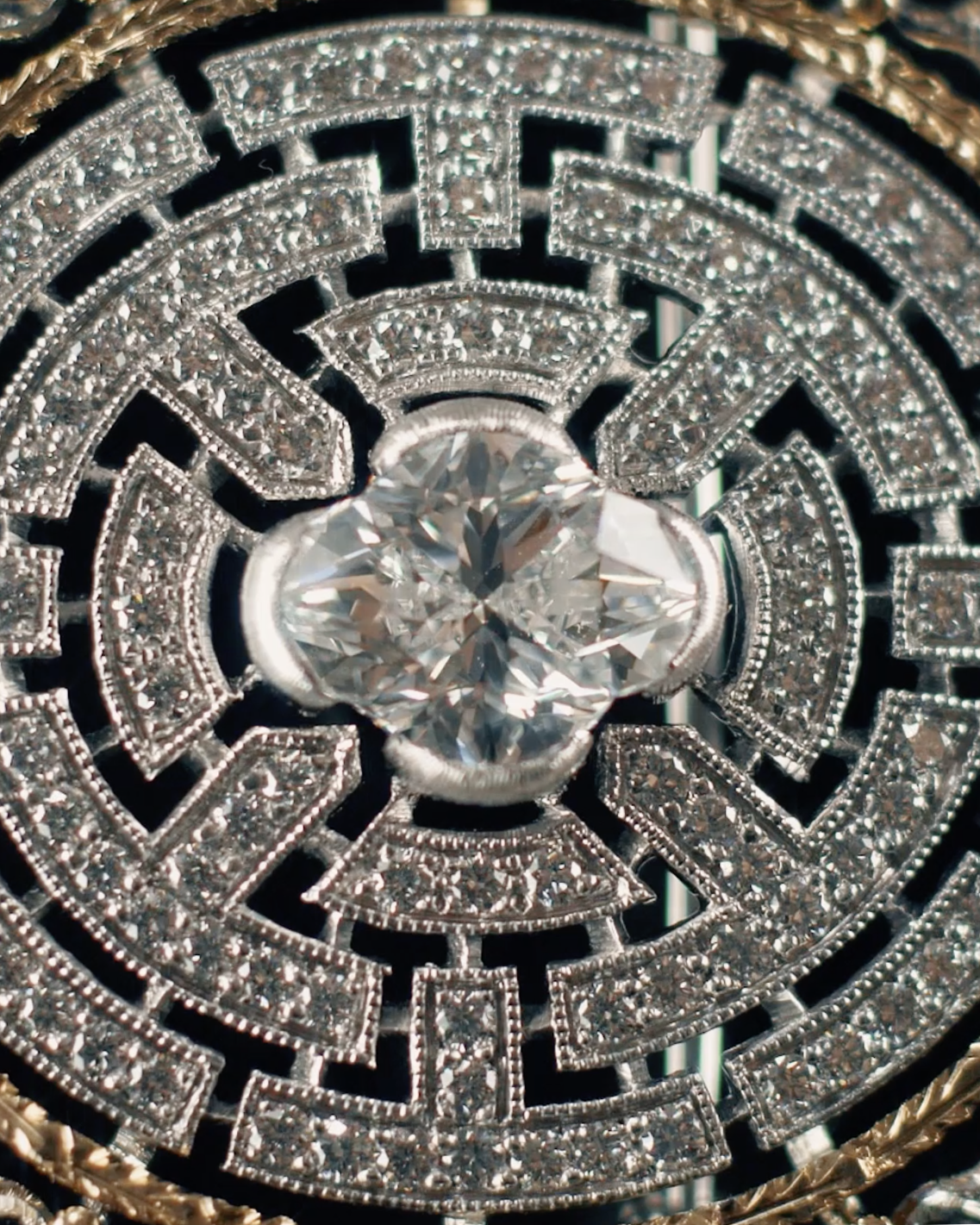
Nothing else in the world but the Buccellati's most renowed honeycomb technique could perfectly fit with the interpretation of Larionov's spider's web: this ring has been masterly handcrafted to reproduce an impenetrable yet superbly elegant and light weft.
This canvas (painted on both sides - only the recto is shown here) was created by Larionov in Paris, where he stayed during the first decade of the twentieth century. In Paris he worked in the Post-Impressionist manner and later in the style of Neo-Primitivism - best exemplified by the present painting.
Image courtesy of Wildenstein & Co. Inc.


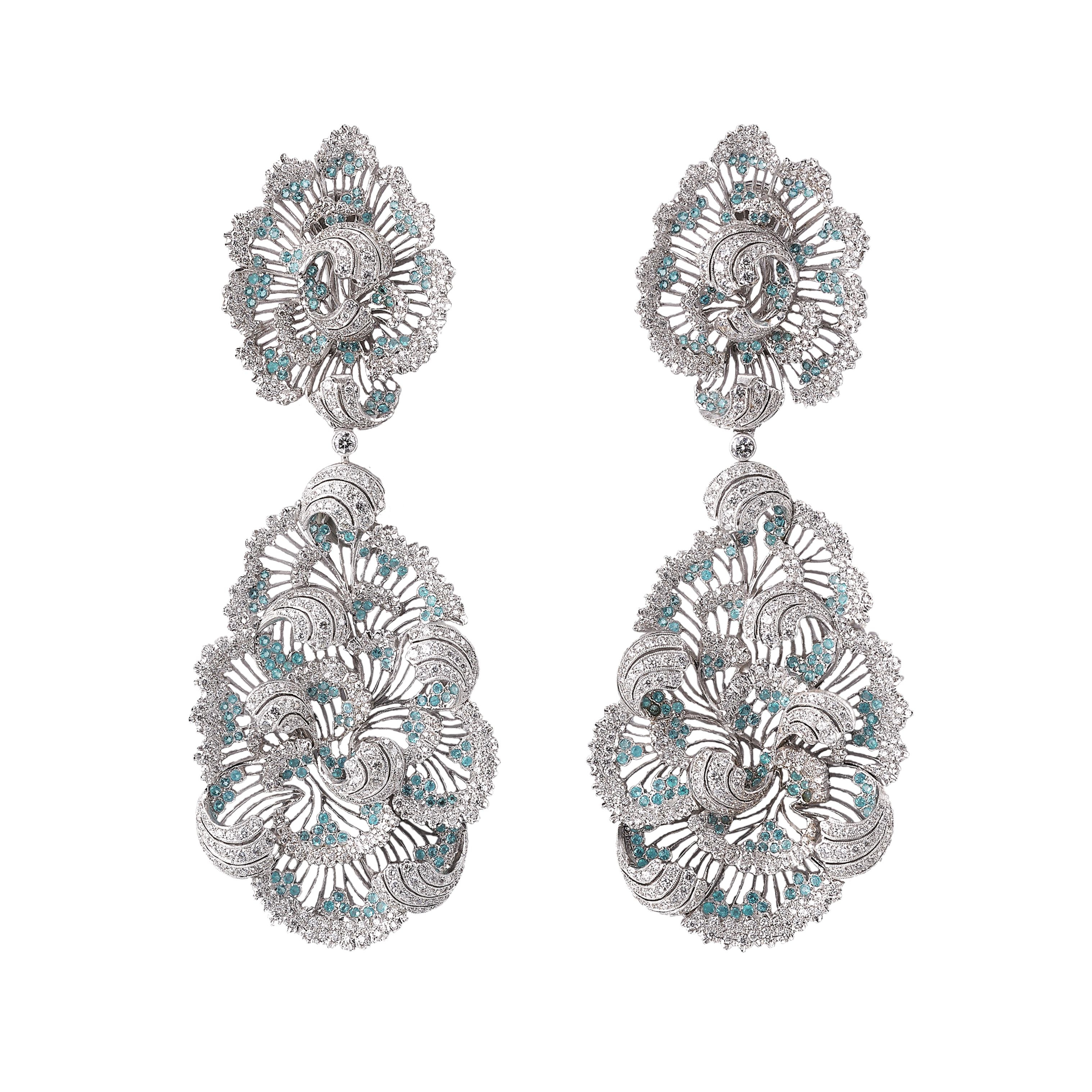
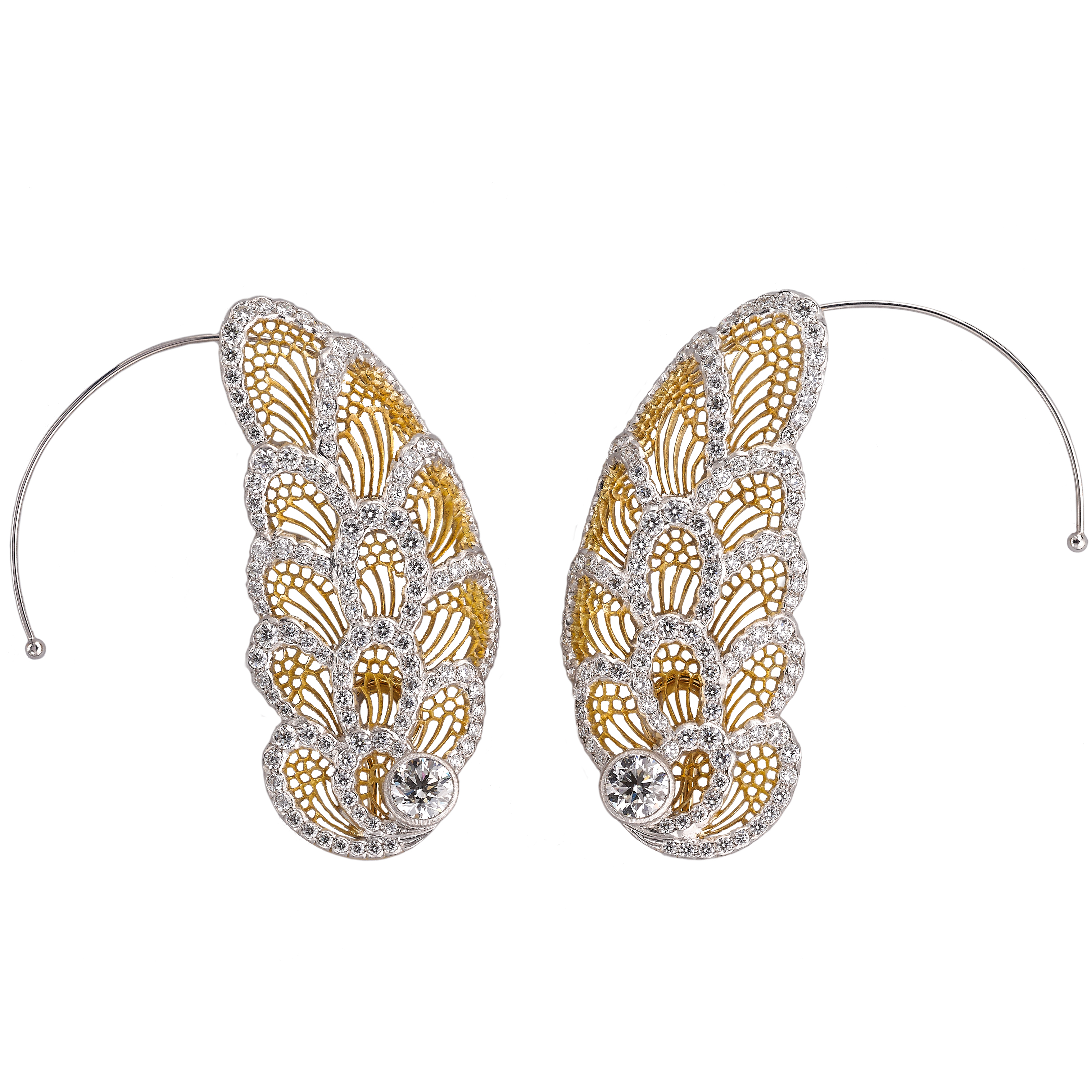
As in Monet's painting, the light is captured within the honeycomb surface of the white gold pendant earrings and then magnified by the Paraiba tourmalines and diamonds. A complex design which is true to the most traditional and enchanting Buccellati style, and evokes the strength of the sea, the beauty of simple colors combined together, the perfection of Nature.
In September of 1886 Monet arrived at the island of Belle-Île, off coast of Brittany, in search of motifs for his paintings. During his sojourn there and despite the frequent inc lement weather, interspersed with shiny sunny days, he was successful in creating a group of works - all depicting the sea and the stark wildness of the Breton sea coast.
Image courtesy of Wildenstein & Co. Inc.


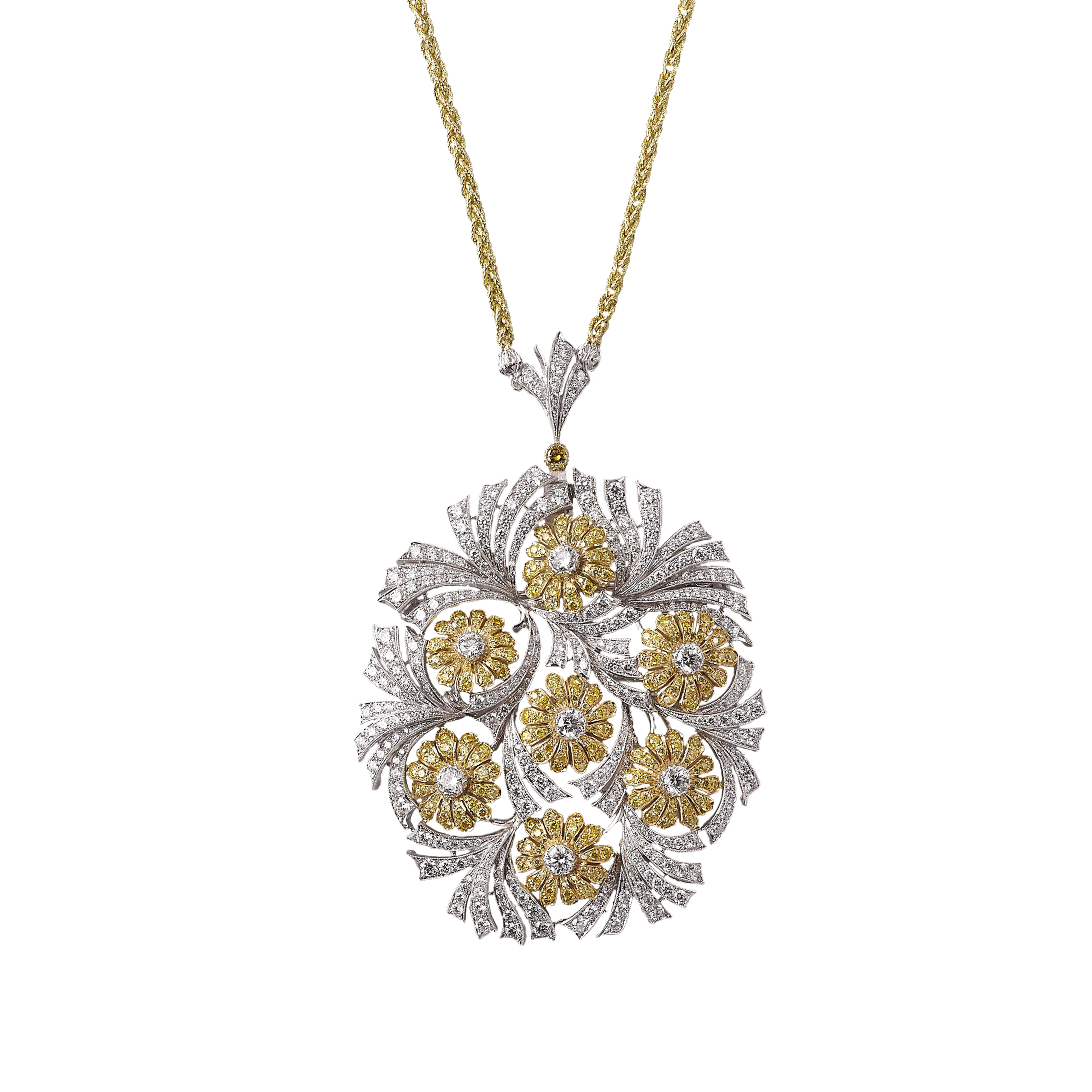
Flowers always inspired Buccellati and this brooch-pendant shows how the House's techniques perfectly apply to the representation of Nature.
Executed in 1930, this still life depicting two vases with flowers against a backdrop of bright yellows, shows to perfection Bonnard's use of colors to enhanche his composition.
Image courtesy of Wildenstein & Co. Inc.


The message of this painting is that imagination is stronger than image. Phaëton is searching for assurance from his mother that his father is the sun god.
Rendered in harmonious and velvety tones of radiant color, this pastel composition is Redon's principal depiction of the foolhardy Phaëton's myth. Son of Helios, the sun god, assured of his divinity and powers Paëthos stands in his father chariot, as he whips the gigantic white horses into a frenzy.
Image courtesy of Wildenstein & Co. Inc.
加载中……